
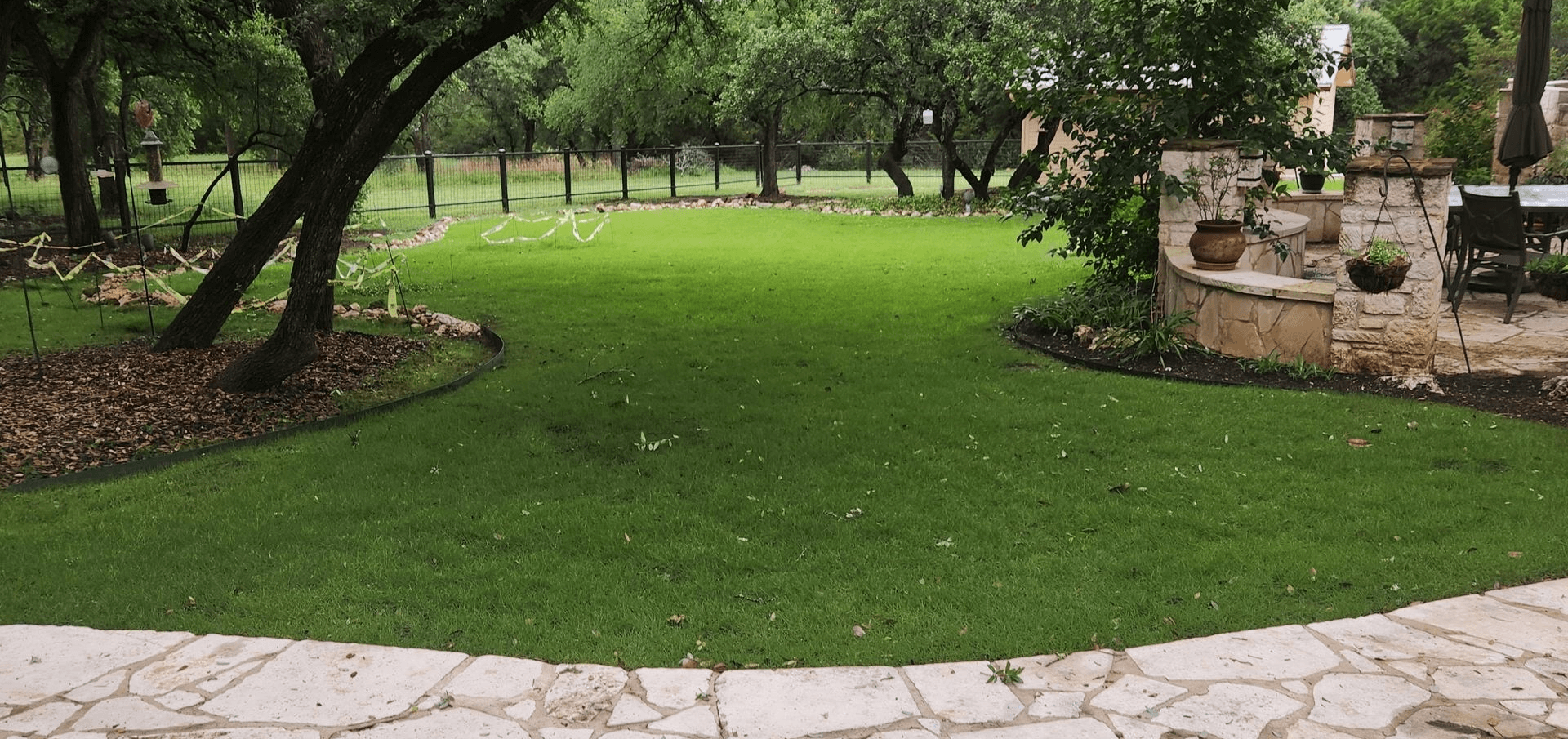
Picking a grass is one of the biggest decisions you make when you put down new sod. This guide compares St. Augustine, Bermuda and Zoysia, the three grasses we install most in Central Texas, so you can match the right one to your yard's sun, water and foot traffic.
The best grass for a lawn in Georgetown, TX depends mostly on sunlight. Local Roots Lawn Maintenance in Georgetown, Texas recommends Bermuda for full sun and heavy foot traffic, St. Augustine for yards with partial shade from mature trees, and Zoysia for homeowners who want a dense, lower-maintenance lawn that handles some shade.
How Do St. Augustine, Bermuda and Zoysia Compare?
All three are warm-season grasses that grow well in Central Texas heat, but they differ in how much sun they need, how much water they use and how they hold up to use. Here is a side-by-side look.
| Bermuda | St. Augustine | Zoysia | |
|---|---|---|---|
| Sunlight | Full sun, 6 to 8 hours | Partial shade, about 4 to 6 hours | Full sun to light shade |
| Shade tolerance | Low | Highest of the three | Moderate |
| Drought tolerance | High | Moderate, needs more summer water | Good |
| Foot traffic | Excellent, recovers fast | Fair | Good, but slow to recover |
| Blade texture | Fine | Wide and coarse | Fine to medium, very dense |
| Typical mowing height | 1 to 2 inches | 2.5 to 4 inches | 1 to 2.5 inches |
| Upkeep | Frequent mowing and edging | Moderate, watch watering | Lower mowing frequency |
When Is Bermuda Grass the Right Choice?
Bermuda is the right choice for open, sunny yards that get a lot of use. It loves heat, handles dry stretches well and repairs itself quickly when kids and dogs wear down a spot.
The tradeoff is upkeep. Bermuda grows fast in summer, so it needs regular mowing to stay tight, and it spreads by runners that creep into flower beds and along sidewalks. Our Bermuda grass mowing height guide covers how short to keep it through the season.
When Should You Choose St. Augustine?
Choose St. Augustine when your yard has partial shade from mature trees or a two-story house. Its wide, soft blades give a lush look, and it tolerates shade better than Bermuda or Zoysia.
St. Augustine does need more water than Bermuda during a Texas summer, and it should be mowed taller. Cutting it too short thins the turf and lets weeds move in.
Is Zoysia Worth It for a Georgetown Lawn?
Zoysia is worth it if you want a thick, carpet-like lawn with less mowing. Its density crowds out many weeds, and it handles light shade better than Bermuda.
Zoysia grows slowly, which is why starting with sod instead of seed makes sense. That same slow growth means damaged areas take longer to fill back in, so it is better for yards with moderate foot traffic.
How Do You Pick the Right Grass for Your Yard?
Start with sunlight, then think about how you use the yard. A quick check on a sunny day tells you most of what you need to know.
- Count the hours of direct sun each area gets. Six or more points to Bermuda; four to six points to St. Augustine or Zoysia.
- Think about traffic. Busy play areas and dog runs favor Bermuda.
- Be honest about watering and mowing. If you want fewer mowings, look at Zoysia.
- Plan for soil prep. Georgetown's clay and rocky soils need proper grading before any sod goes down.
Many yards end up with more than one answer, such as Bermuda in a sunny backyard and St. Augustine in a shaded front yard. If you are planning a new lawn, our Sod Installation 101 guide walks through the full process.
How Do You Keep New Sod Healthy After Installation?
Every grass type needs steady watering while the roots knit into the soil, then a consistent routine of mowing at the right height and feeding at the right time of year. A regular Local Roots lawn maintenance service keeps mowing on schedule, and the Local Roots fertilizer program gives each grass the nutrients it needs through the growing season.
Frequently Asked Questions
What is the most shade-tolerant grass for Georgetown, TX?
St. Augustine is the most shade-tolerant of the three. It still needs roughly four to six hours of sun a day, so very dense shade under mature live oaks may struggle with any turf grass.
Which grass handles drought best in Central Texas?
Bermuda handles drought best. It can go semi-dormant in a dry spell and green back up once it gets water again, which is why it is common on sunny Georgetown lots.
Is Zoysia better than Bermuda?
Zoysia is better if you want a dense lawn that needs less frequent mowing and tolerates some shade. Bermuda is better if your yard gets full sun, sees heavy foot traffic and needs to recover quickly from wear.
Can you mix Bermuda and St. Augustine in one yard?
You can, but it takes planning. Bermuda spreads aggressively and will creep into neighboring turf, so most homeowners keep one grass per area and separate them with beds, walkways or edging.
Why does my grass turn brown in winter?
Bermuda, St. Augustine and Zoysia are all warm-season grasses, so they go dormant and turn tan when temperatures drop. A healthy dormant lawn greens up again in spring.
Which types of sod does Local Roots Lawn Maintenance install?
Local Roots Lawn Maintenance installs Bermuda, St. Augustine and Zoysia sod for homeowners in Georgetown, Round Rock and Sun City, TX.
The Bottom Line
For most Georgetown lawns, sunlight decides the grass: Bermuda for full sun and heavy use, St. Augustine for partial shade, and Zoysia for a dense lawn with less mowing. Choosing the right one up front saves water, time and money later.
Not sure which grass fits your yard? Ask about sod installation from Local Roots Lawn Maintenance. We serve homeowners across Georgetown, TX, Round Rock and Sun City. Call (512) 713-9097 or request a quote today.