
Bermuda grass is one of the most popular lawn grasses in Central Texas—and for good reason. It's durable, drought-tolerant, and thrives in our hot summers. But even a healthy Bermuda lawn can struggle if it's consistently mowed at the wrong height.
Many homeowners assume that cutting the grass shorter means mowing less often. Unfortunately, mowing too low can weaken your lawn, while letting it grow too tall can lead to thatch buildup and an uneven appearance.
So, what is the ideal Bermuda grass mowing height?
The answer depends on your lawn, your mower, and the time of year. Whether you are managing your own yard or hiring a professional team, here's what every Texas homeowner should know about setting their blades.
Why Mowing Height Matters
Grass isn't just something you cut—it's a living plant. Every blade helps capture sunlight and convert it into energy through photosynthesis. That energy fuels root growth, helps the lawn recover from stress, and keeps it looking lush throughout the growing season.
When your yard is maintained at the proper Bermuda grass mowing height, you'll enjoy:
- Thicker turf
- Stronger root systems
- Better drought tolerance
- Fewer weeds
- Improved color
- A healthier, more attractive lawn
On the other hand, mowing at the wrong height can create unnecessary stress that takes weeks to recover from.
What's the Ideal Height for Bermuda Grass?
For most residential lawns in Central Texas, Bermuda grass performs best when maintained between 1 and 2 inches tall. The exact height depends on the type of mower you're using and the appearance you want to achieve.
Rotary Mowers
Most homeowners use rotary mowers. With this type of mower, a Bermuda grass mowing height of 1.5 to 2 inches typically provides the best balance between appearance, durability, and overall lawn health. This slightly taller height also helps shade the soil, reducing moisture loss during the hottest months of the year.
Reel Mowers
Reel mowers produce the clean, manicured look often seen on golf courses and sports fields. Because they make a more precise cut, they can maintain Bermuda grass between ½ inch and 1 inch—but only if the lawn is mowed frequently and receives consistent maintenance.
For most residential properties, this level of maintenance isn't practical, which is why slightly taller mowing heights are generally recommended.
Should You Change the Height Throughout the Year?
Absolutely. Your lawn's needs change with the seasons.
Spring
As Bermuda grass comes out of dormancy, many homeowners perform a spring scalp to remove dormant material and encourage fresh green growth. After the initial scalp, gradually raise the mowing height to your normal maintenance level as the lawn begins growing rapidly.
Summer
Summer is when Bermuda grass grows most aggressively. Maintaining the ideal Bermuda grass mowing height in Georgetown and Round Rock, TX between 1.5 and 2 inches helps protect the soil from the intense Texas sun while allowing the grass to develop deep, healthy roots. Avoid lowering the mower during periods of extreme heat or drought.
Fall
As temperatures begin cooling, Bermuda grass naturally slows its growth. Continue mowing as needed while maintaining the same general height until dormancy begins.
Winter
Bermuda grass enters dormancy during winter. Most lawns require very little mowing until active growth resumes in spring.
Don't Forget the 1/3 Rule
Choosing the right mowing height is only half the equation. It's equally important to avoid removing too much grass during a single mowing. A good rule of thumb is to never remove more than one-third of the grass blade at one time.
For example, if your lawn is maintained at 1.5 inches, avoid letting it grow significantly taller before mowing. Following the proper Bermuda grass mowing height and the 1/3 rule keeps Bermuda grass healthier, stronger, and better prepared for periods of heat and drought.
What Happens If You Cut Bermuda Grass Too Short?
Scalping is one of the most common mistakes homeowners make. Although Bermuda grass is resilient, repeatedly mowing it too low can create several problems.
Weaker Root Systems
When too much leaf tissue is removed, the plant redirects energy toward replacing blades instead of strengthening its roots. Over time, this weakens the lawn's overall health.
Brown Patches
The lower portions of Bermuda grass contain less chlorophyll than the upper blades. Removing too much at once often exposes these stems, leaving the lawn looking brown or yellow until new growth appears.
Increased Water Needs
Short grass provides very little shade for the soil. As a result, moisture evaporates more quickly, forcing homeowners to water more frequently during the summer.
More Weed Pressure
Thin, stressed turf creates open spaces where weeds can establish themselves. Healthy, dense Bermuda grass naturally helps crowd out many common weeds before they become a problem.
What Happens If You Let It Grow Too Tall?
While mowing too short is harmful, allowing Bermuda grass to become excessively tall also creates issues. Overgrown lawns may experience:
- Uneven mowing results
- Increased thatch buildup
- Higher disease risk
- Reduced airflow
- Difficulty following the 1/3 rule
Consistent mowing is always healthier than making drastic cuts after several weeks of growth.
Other Tips for Healthy Bermuda Grass
Proper mowing works best when combined with a few other healthy lawn practices.
Water Deeply—Not Daily
Rather than applying small amounts of water every day, deeper, less frequent watering encourages roots to grow farther into the soil. This improves drought resistance and overall turf health.
Keep Your Mower Blades Sharp
Sharp blades create clean cuts that heal quickly. Dull blades tear the grass, leaving ragged edges that often turn brown and increase stress on the lawn.
Feed the Soil
Healthy grass starts below the surface. Practices like core aeration and top dressing improve soil structure, encourage microbial activity, and help nutrients reach the root zone more effectively.
When paired with proper mowing, these services can dramatically improve the appearance and health of your Bermuda lawn over time.
Why Professional Lawn Maintenance Makes a Difference
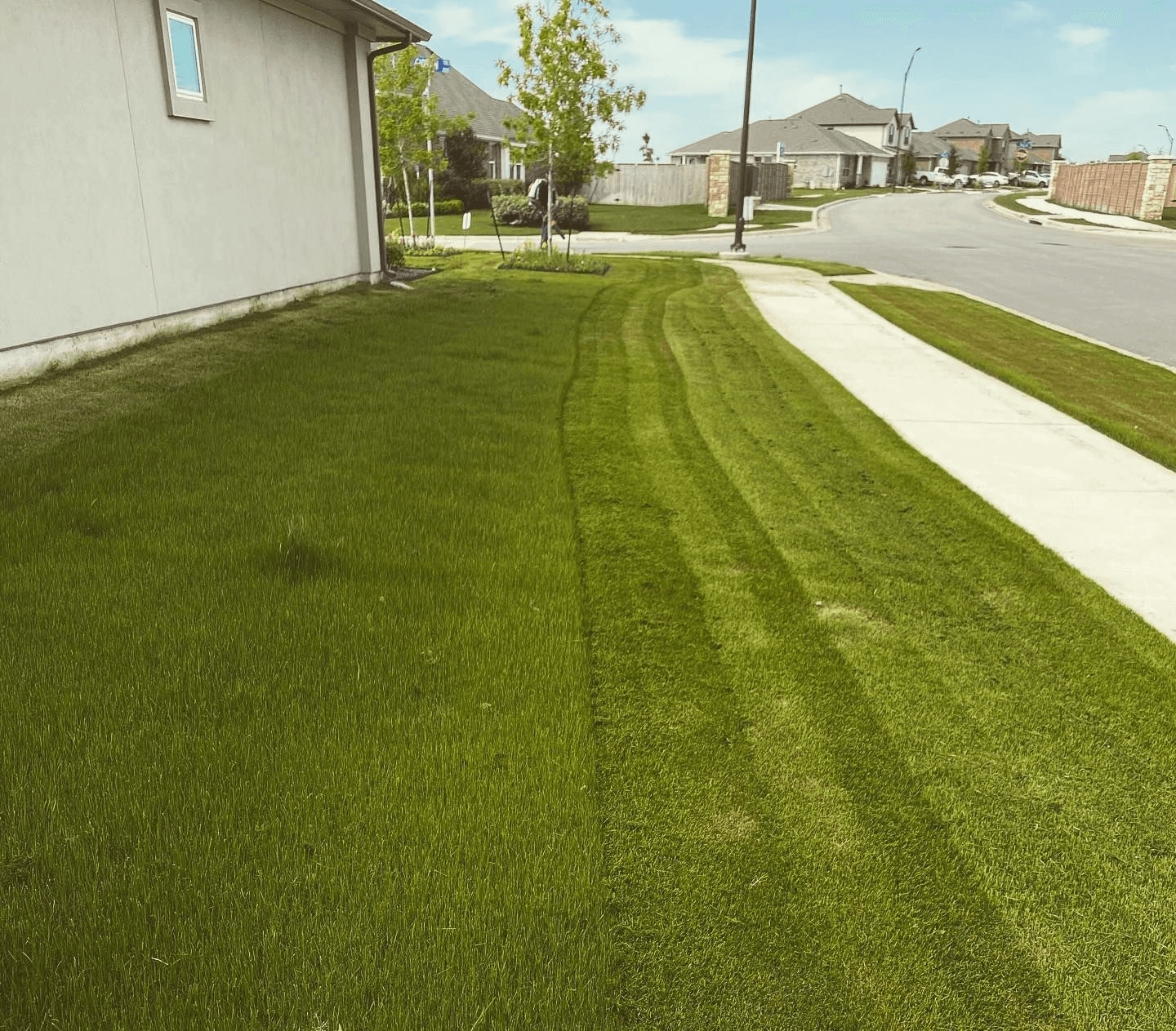
Maintaining the proper Bermuda grass mowing height sounds simple, but staying consistent can be challenging during the busy growing season. Professional lawn maintenance helps ensure your Bermuda grass is mowed:
- At the correct height
- On a consistent schedule
- With properly maintained equipment
- According to seasonal growing conditions
At Local Roots Lawn Maintenance, we understand how Central Texas weather affects Bermuda grass throughout the year. Our mowing practices are designed to encourage healthy growth while keeping your lawn looking its best week after week.
Healthy Bermuda Lawns Start with Proper Mowing
Bermuda grass is naturally tough, but even the strongest lawns depend on proper maintenance.
Keeping your lawn between 1 and 2 inches, mowing consistently, and following the 1/3 rule are some of the easiest ways to encourage thicker turf, stronger roots, and a greener lawn throughout the growing season. Combined with proper watering, seasonal lawn care, and routine maintenance, the right mowing height can make a noticeable difference in both the appearance and long-term health of your yard.
Frequently Asked Questions
What is the best mowing height for Bermuda grass?
For most residential lawns, Bermuda grass should be maintained between 1 and 2 inches, depending on the type of mower and the desired appearance.
Is it okay to cut Bermuda grass very short?
Bermuda grass can tolerate lower mowing heights than many other turf types, but repeatedly scalping the lawn can weaken roots, increase water needs, and reduce overall turf health.
How often should Bermuda grass be mowed?
During the peak growing season, most Bermuda lawns benefit from weekly mowing. Fast-growing lawns may occasionally require more frequent mowing to follow the 1/3 rule.
Should I raise my mower during the summer?
Yes. Slightly taller mowing heights during hot weather help shade the soil, reduce moisture loss, and improve the lawn's ability to handle heat and drought.
Ready to Keep Your Bermuda Lawn Looking Its Best?
Maintaining Bermuda grass takes more than simply mowing every week. The right Bermuda grass mowing height, consistent maintenance, and attention to seasonal conditions all contribute to a healthier, greener lawn. If you're looking for dependable lawn maintenance in Georgetown and Round Rock, TX, or the surrounding Central Texas communities, Local Roots Lawn Maintenance is here to help.
Contact us today at (512) 713‑9097 for a free quote and let us keep your Bermuda lawn looking its best year-round.