
Winter may not seem like an active season for your lawn—but what you do (or don’t do) this time of year has a huge impact on how your yard looks when spring returns. Even in milder southern climates, colder temperatures, frost, and fluctuating weather can stress your turf. The right preparation and proper maintenance will determine whether your yard comes back thick and green…or patchy and struggling to recover.
At Local Roots Lawn Maintenance, we help homeowners protect their lawns year-round. These winter lawn care tips will keep your grass healthy during the colder months while setting your yard up for a strong, vibrant comeback when warmer weather arrives.
Why Winter Lawn Care Matters More Than Most Homeowners Realize
Grass stays alive all winter long—even when it isn’t growing. Depending on your grass type and climate, your lawn will either slow its growth or enter full dormancy. While dormant grass may look brown, dry, or inactive, it is still very much alive and needs support to stay healthy.
Cold temperatures, moisture fluctuations, foot traffic, and frost can all damage stressed turf. That’s why cold-weather lawn protection is essential: the better your lawn survives winter, the better it thrives in spring. Homeowners who take winter seriously often notice in March or April that their yards green up faster, fight diseases better, and bounce back more completely.
1. Understand What Happens to Your Grass in Winter
The first step to caring for your lawn in winter is understanding what dormant grass is. When temperatures drop, warm-season grasses like Bermuda, Zoysia, St. Augustine, and Centipede slow their growth and eventually turn brown. This color change is normal—it’s not a sign of poor health.
Cold-season grasses like fescue may stay green longer but grow slowly during the winter months. Dormancy allows your lawn to conserve energy, withstand colder conditions, and protect itself until temperatures rise again. Your job as the homeowner is to protect the lawn from damage during this vulnerable stage.
2. Keep Your Lawn Clear of Leaves and Debris
Leaves might seem harmless, but they can cause big problems if left to pile up over winter. Heavy leaf buildup leads to:
- Moisture is trapped against the soil
- Increased chance of fungus
- Oxygen deprivation for turf
- Thinning or dead patches in spring
One of the simplest but most important winter lawn care tips is regularly removing leaves before they form thick layers. Whether you mulch them with a mower or bag them completely, your grass needs clear airflow to stay healthy while dormant.
3. Avoid Excessive Foot Traffic on Your Dormant Grass
Because dormant grass is not actively growing, it cannot repair itself as easily. Repeated foot traffic in the same area can compact the soil or cause wear patterns that remain visible long into spring. Try to avoid:
- Parking vehicles on the lawn
- Allowing heavy equipment to sit on turf
- Creating shortcuts through the yard
- Repeated footpaths over wet or frosty grass
Compaction physically squeezes the soil, limiting oxygen supply and making it harder for roots to absorb nutrients when growth resumes. Keeping people and pets out of sensitive areas is an easy yet crucial winter protection measure.
4. Water Wisely Based on Weather Conditions
Many homeowners stop watering their lawns completely in winter, assuming grass doesn’t need moisture. But even dormant grass requires occasional watering—especially during unusually dry or windy stretches. Winter irrigation helps:
- Prevent dehydration
- Support root health
- Protect soil structure
- Reduce stress during freeze cycles
However, you should avoid watering before a predicted freeze. Moisture on the blades can increase frost damage and lead to winter burn. For proper cold-weather lawn protection, only water when temperatures will remain above freezing for several hours.
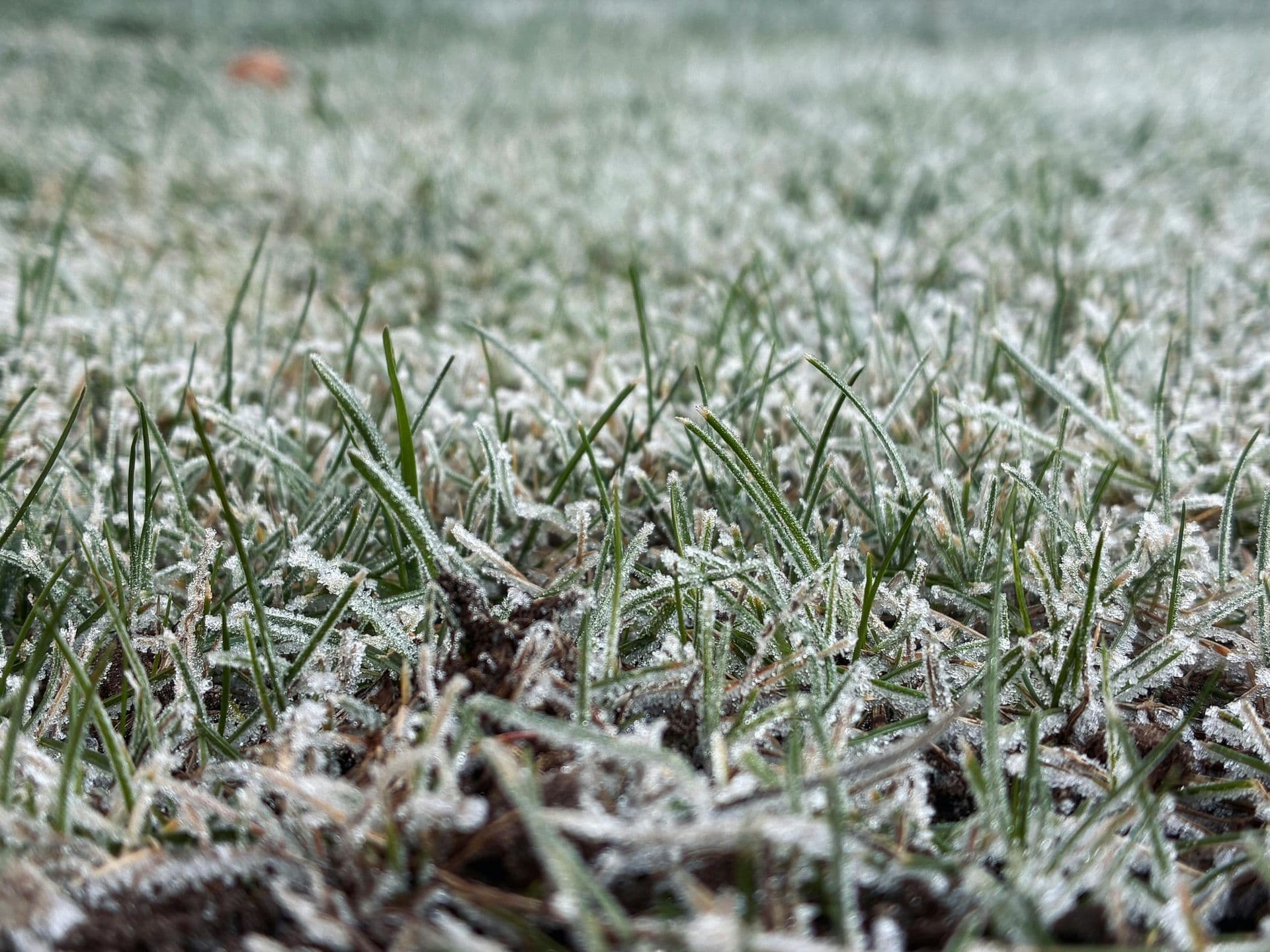
5. Protect Against Frost Damage
Frost is one of the biggest winter threats to turf, especially in climates where temperatures fluctuate often. Proper frost damage prevention can help you avoid blotchy, burned, or dead spots on your lawn. To minimize frost damage:
- Don’t walk on frosty grass. Ice crystals make grass blades brittle. Stepping on them can permanently damage the turf.
- Water in the morning, not the evening. This helps the lawn dry before temperatures drop.
- Watch for frost-prone areas such as slopes, shaded areas, and low spots.
- Avoid mowing too short before cold snaps. Taller grass retains warmth better.
If frost does occur, allow it to fully melt before walking or working on the lawn.
6. Apply a Winter Fertilizer (If Appropriate for Your Turf Type)
Not all grasses need to be fertilized in winter, but some varieties benefit from targeted nutrient support. Cool-season grasses like fescue can receive a late-fall or early-winter fertilizer to strengthen roots and improve spring growth. Warm-season grasses should typically not be fertilized during full dormancy, but a potassium-rich fertilizer applied in late fall can improve winter hardiness and stress tolerance.
If you’re unsure what your yard needs, Local Roots Lawn Maintenance can recommend the right winter fertilizer based on your soil type, grass variety, and local weather patterns.
7. Adjust Your Mowing Height Before Winter Arrives
The last few mows of the season play a bigger role in winter resilience than most homeowners realize. Improper mowing height going into winter can leave your lawn vulnerable to cold, disease, and frost. Here’s what to aim for:
- Warm-season grasses: gradually lower your height to 1.5–2 inches, going into dormancy.
- Cool-season grasses: maintain a slightly taller height for better insulation.
Mowing too short increases stress, while mowing too tall increases the risk of fungus. A balanced mowing approach contributes significantly to your lawn’s cold-weather survival.
8. Winterize Your Irrigation System (If Needed)
Although not all climates require full irrigation blowouts, winterizing your sprinkler system is still important to avoid cracked pipes, broken valves, and expensive spring repairs. Make sure to:
- Turn off the system before hard freezes
- Drain exposed backflow devices
- Insulate above-ground pipes
- Run a short test cycle to ensure valves are closed
A few minutes of preparation can save you hundreds of dollars in repair costs later.
9. Prepare for Winter Pests and Disease
Even though grass growth slows down in winter, pests and fungi don’t necessarily stop. Some thrive in cool, wet conditions—especially when lawns are covered with leaves or moisture gets trapped in the soil. Common winter threats include:
- Snow mold (in cooler regions)
- Brown patch
- Winter weeds
- Voles and burrowing pests
Keeping your yard clean, properly watered, and free from compaction can dramatically reduce winter pest and disease pressure.
10. Look Ahead to Early Spring Preparation
Winter lawn care isn’t just about protecting your yard today—it’s about setting it up for success tomorrow. The care you provide from December through February determines how quickly your lawn rebounds once temperatures rise. When early spring arrives, you’ll see the benefits of:
- Reduced lawn stress
- Stronger root health
- Improved moisture retention
- Faster green-up
- Fewer bare or damaged patches
A little effort in winter means more beauty in spring.
Keep Your Lawn Healthy All Winter Long With Local Roots Lawn Maintenance
Caring for your yard during the colder months doesn’t have to be complicated. With the right strategy and a few simple winter lawn care tips, you can protect your investment, prevent damage, and ensure your lawn comes back stronger than ever when warm weather returns.
Whether you need help with seasonal cleanup, winter fertilizer, lawn health assessments, or general cold weather lawn protection, the team at Local Roots Lawn Maintenance is here to help. We specialize in keeping your yard healthy year-round—winter included.
Want a greener, healthier lawn this spring? Contact Local Roots Lawn Maintenance today and let us prepare your yard for winter the right way.