
When summer temperatures climb in Georgetown, TX, your lawn feels it just as much as you do. Extended heat waves, intense sunlight, and dry Central Texas soil can quickly turn a lush green yard into a patchy, brittle mess. If your grass is looking tired, dull, or thinning, you’re likely dealing with heat stress.
At Local Roots Lawn Maintenance, we provide proven lawn heat stress solutions in Georgetown, TX, that protect turf during extreme temperatures and restore it when damage occurs. In this guide, we’ll walk you through how to identify heat stress, prevent it, and bring your lawn back to life.
What Is Lawn Heat Stress?
Lawn heat stress occurs when grass cannot retain enough moisture to support healthy growth during high temperatures. Even properly maintained lawns in Georgetown can struggle during prolonged periods of heat, especially when rainfall is limited and watering restrictions may apply.
Heat-stressed grass often appears:
- Bluish-gray in color
- Wilted or folded along the blade
- Thin or patchy
- Slow to recover from foot traffic
If footprints remain visible after walking across your yard, your grass is likely dehydrated.
Lawn Heat Stress Solutions for Georgetown, TX, Homeowners
Central Texas summers demand a strategic approach. The following lawn heat stress solutions are especially important for lawns in Georgetown, TX, where high temperatures and clay-heavy soils can intensify drought conditions.
Step 1: Adjust Your Summer Watering Schedule
The most important of all lawn heat stress solutions is proper watering. During peak summer heat in Georgetown:
- Water 1 to 1.5 inches per week
- Split watering into 2 deep sessions
- Water early in the morning (4 a.m.–9 a.m.)
A consistent summer watering schedule encourages deeper root growth. Shallow, daily watering leads to weak roots that dry out faster in extreme heat. Deep watering trains your grass to search for moisture further below the surface, increasing resilience.
Avoid watering in the evening, as overnight moisture can increase disease risk.
Step 2: Raise Your Mowing Height
One of the most overlooked lawn heat stress solutions is mowing technique. During summer:
- Raise mower height by 0.5–1 inch
- Never remove more than 1/3 of the blade at once
Longer grass blades provide natural shade for soil, reducing evaporation and protecting roots. Taller grass also strengthens the plant overall, making it more resistant to drought and intense Texas heat.
Step 3: Improve Soil Health
Healthy soil equals stronger turf. Compacted soil—common in parts of Georgetown, TX—prevents water from penetrating deeply. If water pools or runs off instead of soaking in, your lawn may need aeration.
Benefits of aeration include:
- Reduced soil compaction
- Improved oxygen flow to roots
- Increased water absorption
- Stronger root systems
Better soil structure enhances water retention while preventing runoff, which plays a major role in heat resistance.
Step 4: Choose Drought-Tolerant Grass Varieties
If your lawn struggles every summer in Georgetown, it may be time to consider transitioning to drought-tolerant grass varieties. Certain grass types are naturally better equipped to handle extreme heat and reduced rainfall. These varieties develop deeper roots and require less frequent watering once established.
Incorporating drought-tolerant grass doesn’t mean sacrificing appearance. Many modern turf blends maintain rich color while using significantly less water. For homeowners planning lawn renovations or overseeding, this can be a long-term investment in resilience.
Step 5: Avoid Fertilizing During Peak Heat
Fertilizing during extreme heat can cause additional stress. Nitrogen pushes growth, which increases water demand. When roots are already struggling, forcing growth can backfire.
Instead:
- Avoid heavy fertilization during heat waves
- Resume feeding when temperatures moderate
- Focus on soil health rather than aggressive growth
Strategic timing is key to protecting your lawn in Georgetown’s intense summer climate.
Step 6: Reduce Foot Traffic
Grass under heat stress is weaker and slower to recover. Excessive activity can worsen thinning areas. Try to:
- Rotate play areas
- Avoid mowing during peak afternoon heat
- Give stressed areas time to recover
Small changes can significantly reduce long-term damage.
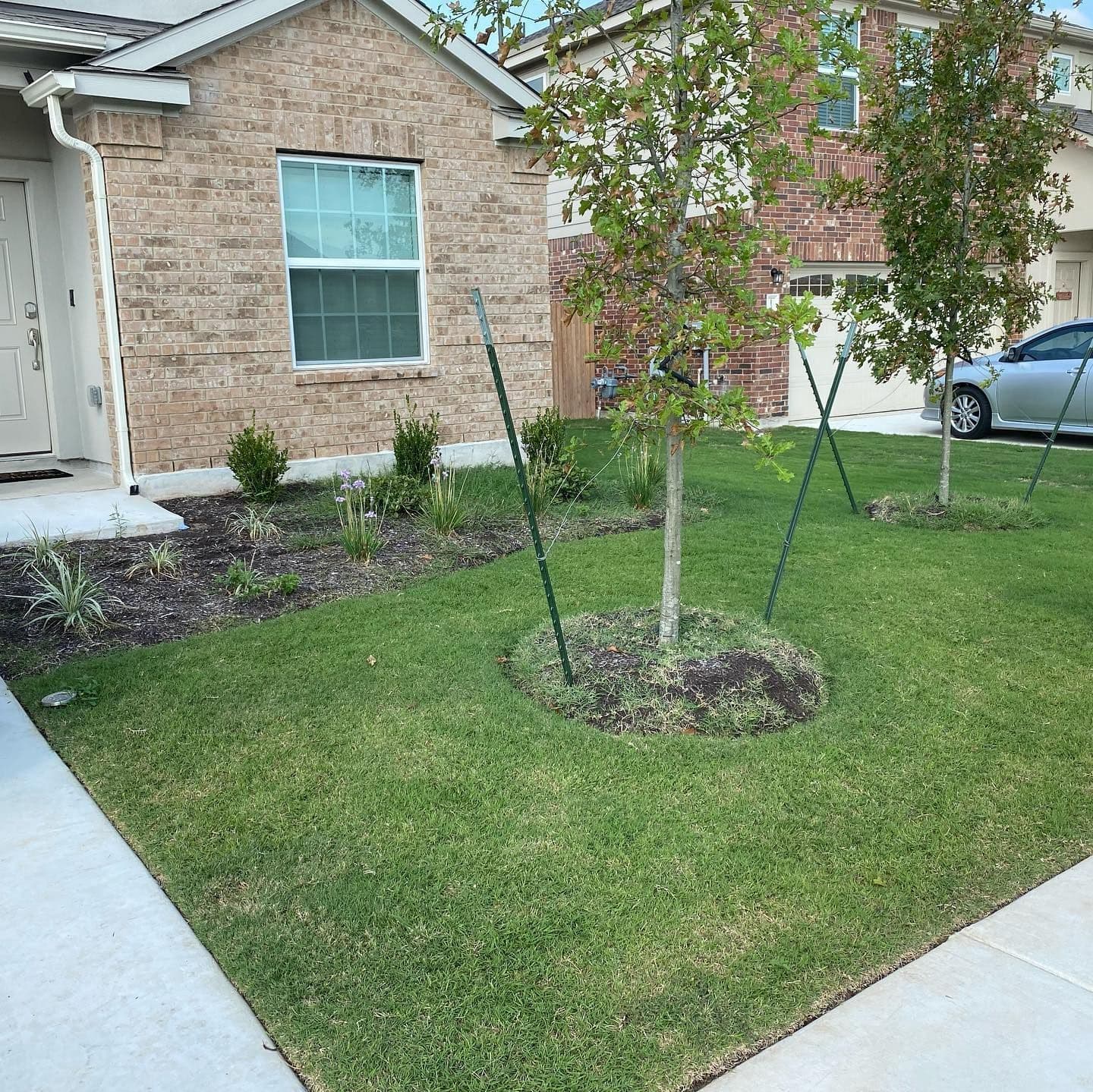
How to Recognize When Turf Recovery Is Needed
If your lawn already shows damage, don’t panic. Most warm-season grasses common in Georgetown, TX can bounce back with the right turf recovery approach.
Signs your lawn needs recovery support:
- Brown patches that don’t green up after watering
- Areas that feel dry despite irrigation
- Thin or bare spots forming
Turf Recovery Tips for Heat-Damaged Lawns
Once temperatures stabilize or rainfall improves, recovery can begin.
- Resume Deep, Consistent Watering: Stick to a controlled watering plan rather than flooding damaged areas.
- Light Aeration (If Compacted): Helps restore oxygen and improve absorption.
- Overseed Thin Areas (When Appropriate): Choose heat-resilient varieties for long-term improvement.
- Topdress with Compost: Adds nutrients and improves soil structure.
- Be Patient: Grass recovery takes time. Avoid overcorrecting with excessive fertilizer or water.
With proper turf recovery tips, many lawns can rebound within a few weeks once conditions improve.
The Role of Shade and Landscaping
Strategic landscaping can reduce heat stress long-term.
- Trees provide natural shade
- Mulched beds reduce reflected heat
- Ground cover alternatives reduce water demand
Heat mitigation isn’t just about watering—it’s about overall lawn strategy.
Smart Irrigation Makes a Difference
Technology can play a big role in lawn heat stress solutions. Consider the following:
- Rain sensors
- Smart controllers
- Drip irrigation for landscaped beds
- Regular irrigation inspections
Even small irrigation inefficiencies can become major problems during peak summer heat. A properly adjusted summer watering schedule tailored to your property prevents waste while maximizing effectiveness.
Prevention Is Easier Than Repair
The best lawn heat stress solutions are proactive. Waiting until damage appears often means more time and effort are required to restore turf. Healthy lawns heading into summer are better prepared to handle heat waves. Spring aeration, balanced fertilization, and strong root development all contribute to heat resilience.
Professional Lawn Heat Stress Solutions in Georgetown, TX
Sometimes, persistent issues signal deeper problems, such as poor soil quality, improper irrigation design, or incorrect grass selection. Local Roots Lawn Maintenance provides customized lawn heat stress solutions in Georgetown, TX, by evaluating your lawn’s condition, soil health, and watering practices to create a plan that protects your investment and keeps your yard thriving through the hottest months.
Summer in Georgetown doesn’t have to mean a struggling lawn. With a proper watering schedule, strategic mowing, healthy soil practices, and expert guidance, your grass can stay strong and resilient even during extreme heat.
If your lawn is showing signs of stress or you want to prevent damage before the next heat wave, contact Local Roots Lawn Maintenance today for professional lawn heat stress solutions in Georgetown, TX, designed to keep your yard green all summer long.