
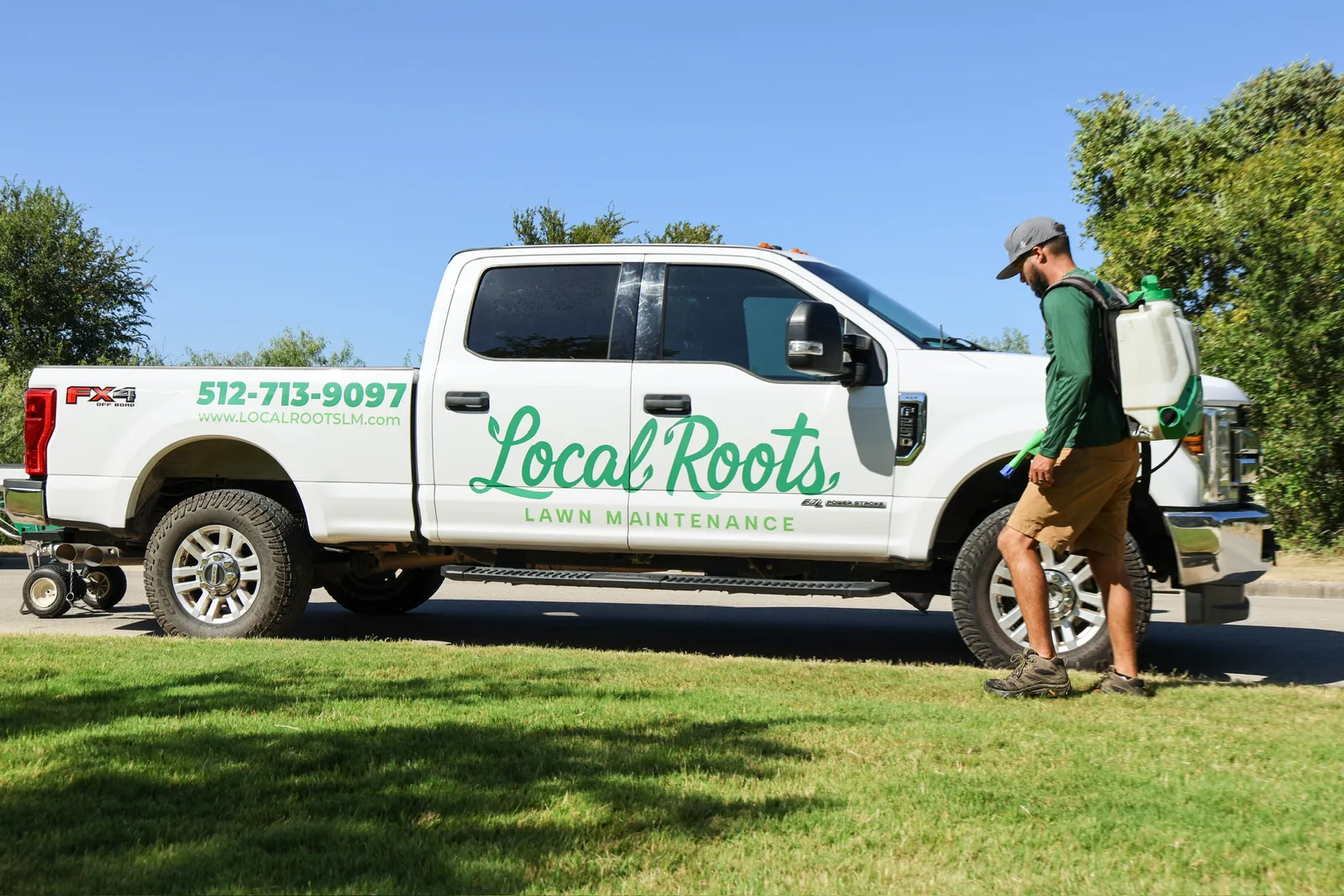
Stickers in the yard are one of the most common complaints we hear from Central Texas homeowners every spring. This guide explains what those stickers are, why they keep coming back, and when to treat them so your lawn is comfortable to walk on again.
The best way to get rid of stickers in a Georgetown, TX yard is to treat lawn burweed in winter, while the plants are small and before the spiny burs form in spring. Local Roots Lawn Maintenance in Georgetown, Texas pairs a fall pre-emergent with thick, healthy turf so fewer stickers come back next year.
What Are the Stickers in My Yard?
In most Georgetown lawns, the stickers that show up in spring come from lawn burweed, also called spurweed or sticker weed. It is a low, spreading broadleaf weed with finely divided leaves that look a bit like parsley or carrot tops.
The plant itself is easy to miss. It hugs the ground under your grass all winter. The trouble starts in early spring, when small, sharp burs form where the leaves meet the stem. By the time you feel them underfoot, the weed has nearly finished its life cycle.
Is It Lawn Burweed or Grassbur?
Texas yards can have two different sticker weeds, and they are treated at different times of year. Here is how to tell them apart.
| Lawn burweed | Grassbur (sandbur) | |
|---|---|---|
| Type of weed | Low broadleaf weed | Summer annual grass |
| What it looks like | Flat, lacy leaves close to the ground | Grassy clumps with upright seed stalks |
| When it sprouts | Fall, as temperatures cool | Spring, as soil warms |
| When stickers appear | Early spring | Summer into fall |
| Where the burs form | At the base of the leaves | Along the tips of the seed stalks |
| Best time to prevent | Fall pre-emergent | Spring pre-emergent |
| Best time to treat | Winter, while plants are small | Late spring, while plants are young |
When Is the Best Time to Treat Stickers?
The best time to treat lawn burweed is winter, roughly December through February. The plants are young, actively growing and have not formed burs yet, so a broadleaf weed control product works well and the burs never develop.
Waiting until you feel the stickers is the most common mistake. By March or April the burs are already formed and hardening, and killing the plant at that point does not soften the spines that are already in your lawn.
How Do You Get Rid of Lawn Burweed?
Getting rid of lawn burweed takes a mix of prevention and good timing. These steps work best together.
- Prevent it in the fall. A pre-emergent applied in September or October stops many burweed seeds from sprouting at all.
- Treat what comes up in winter. A broadleaf weed control product labeled for your grass type works best on a mild day while the weed is small.
- Check the label for your grass. Some broadleaf products can injure St. Augustine, so confirm your turf is listed before you spray.
- Pull small patches by hand. A few plants in a flower bed edge or play area can simply be removed, roots and all.
- Thicken the lawn. Burweed moves into thin, bare spots, so dense turf is your best long-term defense.
Our fall pre-emergent weed control guide explains how that early barrier works and why the timing matters so much in Central Texas.
How Do You Keep Stickers From Coming Back?
Stickers come back when there is open soil for seeds to land in. Burweed drops seed every spring, so a lawn that was full of stickers this year will have plenty of seed waiting for next fall.
The long-term fix is a thick, healthy lawn plus a consistent weed control schedule. Mowing at the right height for your grass keeps the canopy dense, and our guide to the 1/3 rule of lawn mowing shows how to cut without stressing the turf. Regular visits from the Local Roots lawn maintenance service keep mowing and edging on schedule, and the Local Roots fertilization and weed control program times pre-emergent and broadleaf treatments around the Central Texas seasons.
Frequently Asked Questions
When do stickers show up in Georgetown, TX yards?
Lawn burweed sprouts in the fall, grows quietly through the winter and forms its spiny burs in early spring. Most Georgetown homeowners first notice it in March or April, when the burs start sticking to bare feet and pets.
Can you pull lawn burweed by hand?
Yes, for a few plants. Pull them in winter, before the burs form, and get the whole plant out by the root. For a lawn with widespread stickers, a properly timed weed control treatment is far more practical.
Will mowing get rid of stickers?
No. Lawn burweed grows flat to the ground, so the mower passes right over it. Mowing at the right height does help by keeping the grass thick, which leaves fewer open spots for burweed to sprout.
Is it too late to treat stickers once the burs form?
It is late, but not pointless. Killing the plant in spring will not soften burs that have already hardened, but it does stop more seed from dropping, which means fewer stickers next year.
Are lawn burweed and grassburs the same weed?
No. Lawn burweed is a low broadleaf weed that grows in the cool season, while grassbur (sandbur) is a summer grass with spiny burs on its seed stalks. They need different treatments at different times of year.
Does Local Roots Lawn Maintenance help with weed control?
Yes. Local Roots Lawn Maintenance offers a seasonal fertilization and weed control program for homeowners in Georgetown, Round Rock and Sun City, TX, including a fall pre-emergent application aimed at winter weeds.
The Bottom Line
Spring stickers start as a winter weed. Treat lawn burweed between December and February while it is small, use a fall pre-emergent to stop next year's crop, and keep your grass thick so the weed has nowhere to grow.
Tired of stickers every spring? Ask about weed control from Local Roots Lawn Maintenance. We serve homeowners across Georgetown, TX, Round Rock and Sun City. Call (512) 713-9097 or request a quote today.